Protests took place in Tel Aviv, Jerusalem, Haifa, and Beersheba, as a survey found broad but uneven support among Jewish Israelis for Operation Roaring Lion.
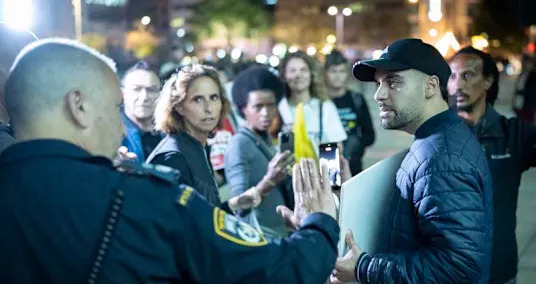
Israel Police arrested 21 anti-war protesters Saturday night as demonstrations against the conflict with Iran expanded in multiple cities despite restrictions on public gatherings.
Protests took place in Tel Aviv, Jerusalem, Haifa, and Beersheba, with hundreds of participants reported in Tel Aviv and Jerusalem and about 100 in Haifa, marking the largest turnout since weekly demonstrations began. Authorities said 13 people were arrested in Tel Aviv and eight in Haifa.
Police said the gatherings were not approved under Home Front Command regulations that ban events with more than 50 people. Officials said the increase in turnout followed calls by groups opposing the government to protest despite the restrictions.
“During a situation assessment that took place at the scene with a Home Front Command representative… it was clarified that there was a real risk to human life and accordingly, Yarkon [precinct] police commander Tzachi Sharabi ordered the gathering to be dispersed,” police said.
Hadash-Ta’al chairman Ayman Odeh, an Arab lawmaker involved in the protests, criticized the police response, calling officers fascists “in the service of the government” and saying they were afraid of “the heroic citizens who went out, despite everything, to make their voice heard.”

Survey shows broad, uneven support for war
The demonstrations come as a March 2026 survey by the Israel Democracy Institute found broad but uneven support among Jewish Israelis for Operation Roaring Lion. Support was strongest on the Right at 87% and about half on the Left.
The survey also found that Jewish and Arab respondents largely agreed that Iran’s resilience has been stronger than expected. Most Jewish respondents said Israeli society could sustain the campaign for up to one month, while 28% said as long as needed. Arab respondents were less optimistic about how long the public could endure the conflict.
A majority of Jewish respondents said Prime Minister Benjamin Netanyahu’s decision was driven by security considerations, while most Arab respondents viewed it as political.
latest_posts
- 1
 IDF continues counterterrorism operations in Gaza Strip, including destroying terror tunnels
 - 2Pick Your #1 breakfast food
- 3The cave was pitch black – so to create this magical underwater shot, the photographer had to use all his camera expertise...
- 4Fundamental Home Exercise center Hardware: Amplify Your Exercises
- 5SF Chinatown's historic Empress of China building being revived into cultural campus





- 6 Travel Services for Colorful Get-aways: Pick Your Fantasy Escape
- Police break up illegal chicken slaughter in Germany
- Former biotech CEO sued over COVID vaccine alleged insider trading
- Interoceanic Train derails in southern Mexico, injuring at least 15 and halting traffic on line
- Find Exemplary Scents: An Extensive Aide
- Germany paves the way for tighter EU asylum rules
- 6 Tire Brands Reasonable for Seniors
- $1,000 bribes, Mormon momfluencer mixers and making content to get plastic surgery: The wildest things I learned reporting my book
- Trump announces 'Patriot Games' with 2 competitors from every state and territory: What we know