IRAN AFFIARS: Iranian dissident Afshin Javid describes how the regime indoctrinates children to dream of martyrdom.
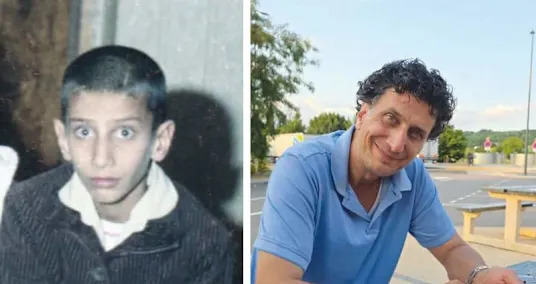
The civilian cost of the war against the Islamic regime is a tragic but necessary sacrifice that the large majority of Iranians are willing to endure so their children may one day live in freedom. That’s the assessment of Afshin Javid, a former member of the Basij paramilitary force’s execution squad, who later became a devout Christian.
“Iranian people feel they are condemned to three types of deaths,” he said in an interview with The Jerusalem Post on Monday. The options, he said, were to be killed by the regime; experience a death of the soul by watching Tehran brutalize, rape, and murder their loved ones; or be killed in US or Israeli strikes. The choice for Iranians is simple, he noted, as the airstrikes carry with them hope of regime change and a different future.
“It hurts to see your people dying… I’m still Iranian, so my heart aches every time I hear there is a death,” Javid said, speaking about the civilian casualties. “But for the first time, Iranian people, myself included, are saying: ‘If there is death, there may be freedom, a light at the end. But if this death does not happen, then they will kill us anyway, with no light at the end of the tunnel.’”
Understanding the value of life
THE VALUE OF life was not always something understood by Javid. When he was eight, his home in Abadan, Iran, was bombed, and his journey to Islamism began. Told by his grandfather that the West had destroyed everything he owned because he was a Muslim, Javid committed himself entirely to Islam and the Islamic regime’s doctrine of martyrdom.
“We had been completely desensitized to the value of life itself. Life for them [Islamists] doesn’t mean much… What is actually glorified is death, especially for a cause for jihad, for a holy war, to be a martyr,” he said as he explained the mentality among the regime’s supporters and how hard it is for those with a Western mindset to understand this.

“I wanted to be a good Muslim,” Javid shared, recounting how he heard stories from his childhood martyrdom was the way to “serve Allah,” particularly after the 1979 Iranian Revolution.
After watching videos of children on TV clearing minefields in Iraq, and hearing the religious praise pushed on those killed in the line of duty, Javid forged his parents’ signatures to enlist in the Iranian military at age 14. Carrying a cheap metal key, which the minors were told was a “key to paradise,” and a small Koran, Javid was briefly deployed before his father demanded that authorities return him, furious he had been allowed to be sent to die without parental consent.
Thousands of children were sent to die on the border, and many families were groomed to sacrifice their children by both religious doctrine and the financial benefits offered to those standing behind Ayatollah Ruhollah Khomeini. The regime recruited children as young as nine to sweep the minefields, recruiting them from slums and providing families with Bunyad-e Shaheed (Martyrs’ Foundation) payments when their children were killed or maimed, according to the UN Refugee Agency.
The International Committee of the Red Cross estimated that at least 10% of Iranian prisoners taken during the Iran-Iraq War were under 18, though the official number of child soldiers deployed remains unknown.
“We saw on TV how children are becoming soldiers. They’re walking on landmines; children were volunteering to fight and everything, teenagers as early as 13 to 14,” he recounted. “It was all the time, 24/7, on TV. I thought, ‘I don’t know if Allah is pleased with me. I want to do more. I want to do more.’
“I thought, [this is] the only way I know to serve Allah, and he would be pleased with me. Looking back, you realize you have been brainwashed, but at that time, according to the teachings of Islam, it is to be a martyr. So if you are a martyr, then you immediately go to heaven, and you can even vouch for family members to come to heaven,” he explained.
RECALLED FROM the border, Javid began volunteering at a local mosque and joined the Basij paramilitary force, a voluntary militia that worked under the IRGC. He would spend his days ensuring the neighborhood was compliant with the country’s new Islamic foundations, checking whether women were fully covering their bodies, and not listening to music. His dedication and the reputation he developed as a true believer led him to be recruited to the militia’s execution team in the “Sabi l’aw’allah” (“In the cause of Allah”).
The first execution he saw was more brutal than those that are described in Western accounts, he said. The victim was lifted by the neck with a rope, ensuring that they suffocated rather than have the quick death that often results from the broken neck of a drop-hanging.
“As I watched, I felt like something died in me, rather than the person dying. And reality is that the value of life completely dissipated for me,” Javid said. “I remember asking myself, at age 14, ‘Is Allah pleased now with me because I killed somebody? I was part of the team that killed somebody, and they told us he’s an infidel. Now what?’
“I didn’t have some sort of affirmation, confirmation that Allah is pleased with me. And then I thought to myself – and this is a buildup on all the things that you are fed through the media, the school system, everything – that you need to find joy when you’re doing Allah’s will; if you’re killing the infidel, you need to be joyful. There needs to be a celebration.”
Family's history of regime dissent drove Javid to Christianity
JAVID SAID his parents were unaware of how extreme his involvement in the Basij had become, but his grandfather, a dedicated Muslim but generally opposed to violence, decided he should be sent away to convert Christians to Islam, once he discovered Javid’s activities.
Javid’s father was beaten by the regime, since he was not an observant Muslim, though he had initially supported the revolution as a communist rather than as a religious fanatic. This enabled Javid to claim political asylum in Pakistan. After spending a few years preaching the tenets of Islam on behalf of the regime, he was given a fake passport to fly to Malaysia, where he was later arrested for holding false documents.
From jail, Javid continued his dedication to Islam and helped at the mosque until he experienced a religious revelation, or an act of divine intervention, that led him to convert to Christianity.
“I had a vision of Jesus Christ. I was in my room, praying, and a man appeared to me; his whole being was shining. It was beaming out of him, which scared me first, and I instantly knew that he is holy and just. I knew, no matter how much I prayed, how much I do these things, I have not been just. I have not been holy, and he has to kill me,” Javid claimed.
“But I didn’t want to die, so I asked for forgiveness. I kept repeating, ‘Forgive me, forgive me, forgive me,’ but I didn’t think he would or he could. Then I felt a touch on my shoulder, and he said, ‘I forgive you.’ And I felt, literally, the words penetrating, and I was just lighter.”
Javid said the forgiveness had meant so much to him, as he had been taught in Islam that Allah was merciful, but he had never seen mercy from those claiming actions in his name and had always been taught he would need to wait for his day of judgment.
He recalled that immediately after the vision, he rushed to the mosque and tried to convince them to convert to Christianity, which led to attempts on his life. Despite this, he continued preaching about Christ, which prompted prison authorities to summon Iranian diplomats to speak with him.
“I told the Iranian ambassador that he should give his life to Jesus. That didn’t go very well either,” Javid quipped, adding that the ambassador said he would soon be dealt with back in Iran.
After being supplied with a fake passport to fly back to Iran, Javid was surprised to find himself in Bangladesh after a mix-up with his boarding pass. From Bangladesh, he traveled to Canada in 1992, but eventually relocated to Germany in 2019 after learning of the threat of radical Islam in Europe.
FROM GERMANY, Javid has campaigned for Iranians, including many who fled Iran to safely convert to Christianity from the West, and continues to be targeted by the regime.
He stressed to the Post that if the regime is ever successful in its attempts on his life, he will find peace in knowing he did what he could to help his people escape the regime’s brutality.
Javid said he now speaks publicly about his past in the Basij, in the hope that others will better understand how the system operates and how easily it can shape those raised within it. He has since visited Israel on multiple occasions and has spoken openly against the Islamist forces working against the Jewish state.
latest_posts
- 1
 Huge Iranian missile fragments, intercepted by air defenses, lay scattered across Israel, West Bank
 - 2New movies to watch this week: See 'Marty Supreme' in theaters, rent 'Springsteen: Deliver Me from Nowhere,' stream 'Cover-Up' on Netflix
- 321 Incredibly Interesting Contemplations To Observe Consistently
- 4Remote Headphones: Improve Your Sound Insight
- 5Flu activity rises sharply across US with 7.5 million cases, CDC data shows


- Step by step instructions to Lessen Your Gamble of Creating Cellular breakdown in the lungs
- First Houthi launch toward Israel since war began triggers alerts across the Negev
- Flights canceled at 40 U.S. airports: Follow live updates as FAA cuts to air traffic take effect amid government shutdown
- Becoming amazing at Arranging Pay Raises
- Far-right AfD invited back to Munich Security Conference in 2026
- RFK Jr. says he's following 'gold standard' science. Here's what to know
- Step by step instructions to Shield Your Wellbeing Around 5G Pinnacles\
- Nestlé recalls infant formula in 49 countries. See list.
- Figure out How to Get a good deal on Your Rooftop Substitution Venture